



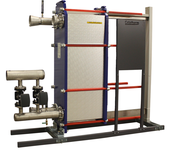


Heat Interface Units
Efficient Heat and Hot Water
for Family Homes or up to 12 Flats
What is a Heating Interface Unit ?
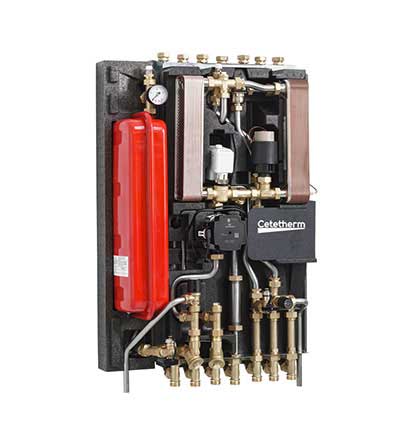
Heating Interface Unit (HIUs) provide and control hot water for both space heating and domestic hot water use.
What benefits do our HIUs deliver?
Our HIUs can be connected to district heating systems, community heat networks, or local heating sources, including renewables.
They’re highly energy-efficient (fully insulated, with the lowest return temperature on the market), totally monitorable and controllable (via both heating controls and remote apps), and supplied pre-assembled, pre-mounted, pre-wired, pre-tested - ready to go!
They’re also versatile and powerful, incorporating either one or two heat exchangers to scale easily with demand.
Where are our Heating Interface Units used?
Our HIUs are an ever-present brand in everything from one-family houses to blocks of up to 12 flats, delivering heat and hot water sustainably, manageably, and economically.
Meet the solutions
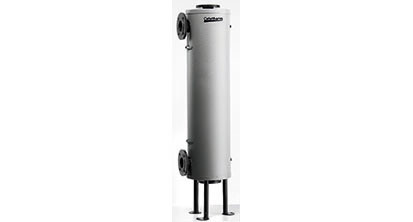
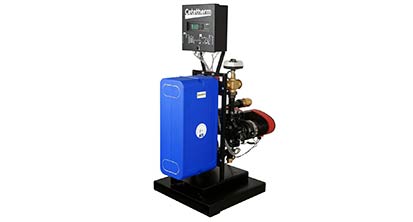
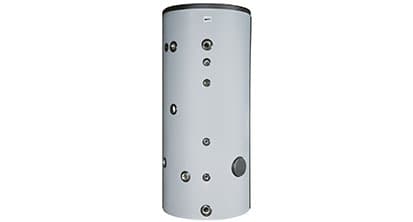
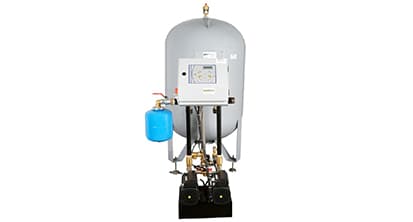
With up to 60 kW capacity, our Heating Interface Units take anything from a house to a block of flats efficiently and cost-effectively in their stride. Click on a solution below to find out more.
Domestic hot water & space heating
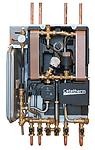
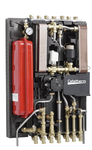
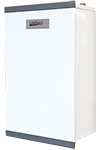
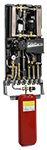
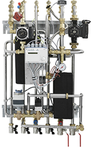
Domestic hot water
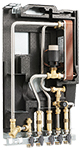
FAQ
Where can I find the software to update my Heat Interface Unit?
Currently, only “Matrix” can be updated. The software can be found on myUplink for download.
For more information, contact our customer support.
What is district heating?
District heating is a system for heating buildings by producing hot water centrally and distributing it through a network of pipes to households, businesses, and public buildings.
The heat is generated at a heating plant through recycling and combustion of materials such as biofuel and waste, or from surplus energy/waste heat from industries.
Is district heating environmentally friendly?
District heating generally has a low environmental impact, especially in Sweden where it is largely produced using renewable and recycled fuels.
About 90% of district heating in Sweden comes from biofuels, waste, surplus heat, and other renewable sources.
How can I get district heating installed in my house or property?
To find out if district heating can be installed at your property, contact your district heating provider.
Please note that a water-based heating system is required for installation.
How can we help?
We'd love to receive your requests!